Burberry for a winter evening
The friction is this: you need to arrive at a winter dinner looking like you haven't just fought your way through February wind. No static hair. No visible bulk under the coat. No overheated flush by the time you reach the table. The work happens before you leave the house — choosing pieces that insulate without announcing it, that layer without adding width, that let you move through cold air and warm rooms without adjusting anything.
Burberry understands this specific problem. The maison has spent more than a century solving for British weather, which means solving for transition. A winter evening in London or New York or Toronto isn't one temperature — it's four. The street, the car, the entryway, the dining room. You need a wardrobe that works across all of them without looking like it's trying.
The foundation: knit that holds its line
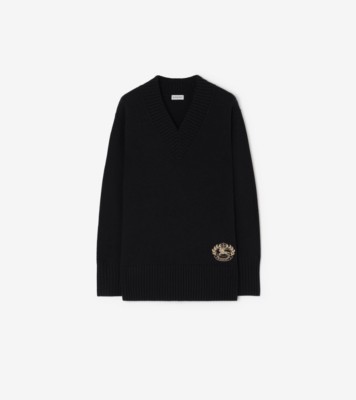
Start with a fine-gauge merino rollneck. Not cashmere — cashmere pills under a coat and loses its shape by dessert. Merino holds. Burberry's archival knitwear, the kind that shows up season after season with minimal variation, works because it doesn't fight the body. It skims the ribcage, sits close at the wrist, doesn't bunch at the waist when you layer over it.
The rollneck does two things a crewneck can't. First, it fills the gap between your collar and your jaw, which means you don't need a scarf indoors. Second, it reads as considered without reading as formal. You can wear it under a blazer or a trench and the proportions stay clean. The key is colour: navy or charcoal, never black. Black knit under winter outerwear looks like you're trying to disappear. Navy looks like you made a decision.
The mid-layer: a blazer that breathes
Here's where most people add bulk they don't need. A heavy wool blazer under a heavy wool coat is too much cloth. You end up looking padded, and you overheat the second you sit down. Burberry's solution is a blazer in tropical-weight wool or a wool-mohair blend — something with a looser weave that lets air move.
The cut matters more than the weight. You want a jacket that sits close through the shoulders but doesn't pull when you raise your arms. The sleeve should end a half-inch past your wrist bone, no more. That extra fabric bunches under a coat sleeve and throws off the whole line. A proper fit means you can layer a trench over it and still move your arms freely.
This is also where you bring in texture. A subtle herringbone or a Prince of Wales check gives the outfit depth without requiring a pocket square or a tie. The pattern does the work. You don't need to.
The outer layer: a trench, not a puffer
The puffer has its place. That place is not a winter dinner. A padded coat solves for extreme cold, but it doesn't solve for elegance, and it doesn't transition well from outside to inside. You can't drape it over a chair without it taking up two seats. You can't carry it without looking like you're hauling a sleeping bag.
The Burberry trench — specifically the Kensington or the Chelsea — solves differently. It's built for rain, but the cotton gabardine is tightly woven enough to block wind. The interior is often lined or comes with a zip-in liner that you can remove once you're indoors. That modularity is the point. You arrive warm, you remove the liner in the coat check, and if you need to step outside between courses, the shell alone is enough for ten minutes of cold.
The trench also holds its shape. You can belt it or leave it open. You can turn up the collar or leave it flat. It responds to how you wear it, which means it works across contexts. A puffer looks the same on everyone. A trench looks like it belongs to you.
The detail: a scarf that doesn't bulk
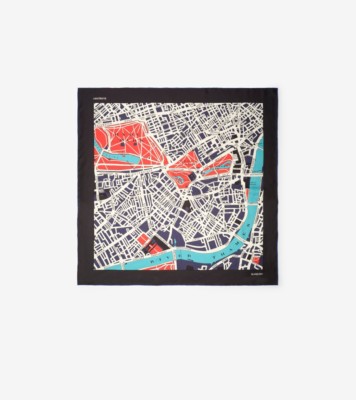
If the temperature drops below freezing, you'll want a scarf. But not a chunky knit that adds four inches to your neckline. Burberry's cashmere scarves — the lightweight ones, not the blanket versions — are warm enough to matter and thin enough not to distort your silhouette. Drape it once around your neck, tuck the ends inside your coat, and forget about it.
The check is optional. The house's signature pattern works if you're keeping everything else solid, but if you're already wearing a patterned blazer, go for a solid scarf in camel or grey. The goal is warmth and proportion, not branding.
What not to do
Don't wear a turtleneck and a scarf. Pick one or the other. Don't wear gloves that you have to peel off at the table — get a pair thin enough to slip into a pocket in one motion. Don't overdress the bottom half to compensate for a thin coat. Heavy boots and flannel trousers under a trench look unbalanced. Keep the weight consistent from shoulder to ankle.
And don't arrive looking like you've been warm the whole time. A slight flush, a bit of cold still in the fabric — that's honest. That's February. The trick is looking like the cold hasn't rattled you.