## The Friction
The Friction
A winter evening is not a winter day. You leave at seven, not seven in the morning, and the coat that worked for errands will read wrong across a dinner table. The air is the same temperature. The context is not. Jacquemus understands this—the house built its name on summer, but its winter pieces solve a different problem: how to arrive warm without looking like you dressed for a hike.
The friction is this: bulk versus occasion. You need insulation. You do not need a puffer that holds its shape when you drape it over a chair. The evening asks for a silhouette that moves, and Jacquemus delivers that through construction, not thickness.
The Coat
Start with the Le Manteau Obiou, a wool coat cut long enough to cover the knee but narrow enough through the shoulder that it does not add width. Jacquemus uses a single-breasted closure here, four buttons, and the lapel sits flat rather than rolling open. This is not a statement coat. It is a solution.
The wool is heavyweight—around 500 grams per metre—but the lining is minimal, which keeps the drape close to the body. When you move, the coat moves with you rather than around you. That distinction matters at a table or in a car. The sleeves are set slightly forward, a detail borrowed from tailoring, and it lets you reach without the shoulder seam pulling back.
If the Obiou is unavailable, the Le Manteau Baou works similarly. Same narrow shoulder, same length, but with a concealed placket instead of buttons. Either one leaves you covered without looking padded.
The Knit
Underneath, a fine-gauge merino crewneck. Jacquemus makes these in a 14-gauge knit, which is tight enough to sit smooth under a coat but substantial enough to hold warmth. The house often uses a slightly cropped hem—it hits at the natural waist rather than below—and that keeps the proportions clean when you layer.
Colour: ivory, black, or one of the deeper tones from the seasonal palette. This season that includes a charcoal brown and a blue so dark it reads almost black in low light. Avoid patterns here. The knit is not the focal point. It is the base layer that lets everything else function.
The neckline should sit just below the collarbone. High enough to show when the coat is open, low enough that it does not compete with a scarf if you add one. Sleeves should end at the wrist bone. Jacquemus cuts these slim through the forearm, and that keeps the line unbroken from shoulder to cuff.
The Trouser
Le Pantalon Droit, a straight-leg wool trouser with a mid-rise and a pressed front crease. Jacquemus keeps the leg opening around 18 centimetres, which is wide enough to skim over a boot but narrow enough to read tailored. The rise is crucial—it sits just below the navel, and that allows the knit to tuck cleanly without bunching.
The fabric is a wool-blend gabardine, tightly woven, with enough body to hold the crease through an evening. These are not trousers that wrinkle at the knee after an hour. The house often adds a subtle taper from knee to hem, and it sharpens the silhouette without making the leg look pinched.
In black, charcoal, or navy. If you are wearing the ivory knit, the black trouser anchors it. If the knit is dark, the charcoal trouser adds a degree of separation without introducing contrast.
The Boot
Le Bottes Carro, an ankle boot in smooth calfskin with a low block heel—around four centimetres. The shaft is cut to sit just above the ankle bone, and the opening is narrow enough that the trouser leg can tuck inside or sit over it depending on the proportion you want.
Jacquemus keeps the toe slightly squared rather than pointed, which makes the boot feel grounded rather than delicate. The heel is stacked leather, not rubber, and it sounds deliberate when you walk. That matters in a quiet room.
The boot should fit close to the foot. No gap at the heel, no extra room at the toe. This is not a silhouette that tolerates looseness. If the Carro does not fit your instep, the Le Bottes Carro Hautes—a knee-high version—offers a similar line with more coverage.
The Bag
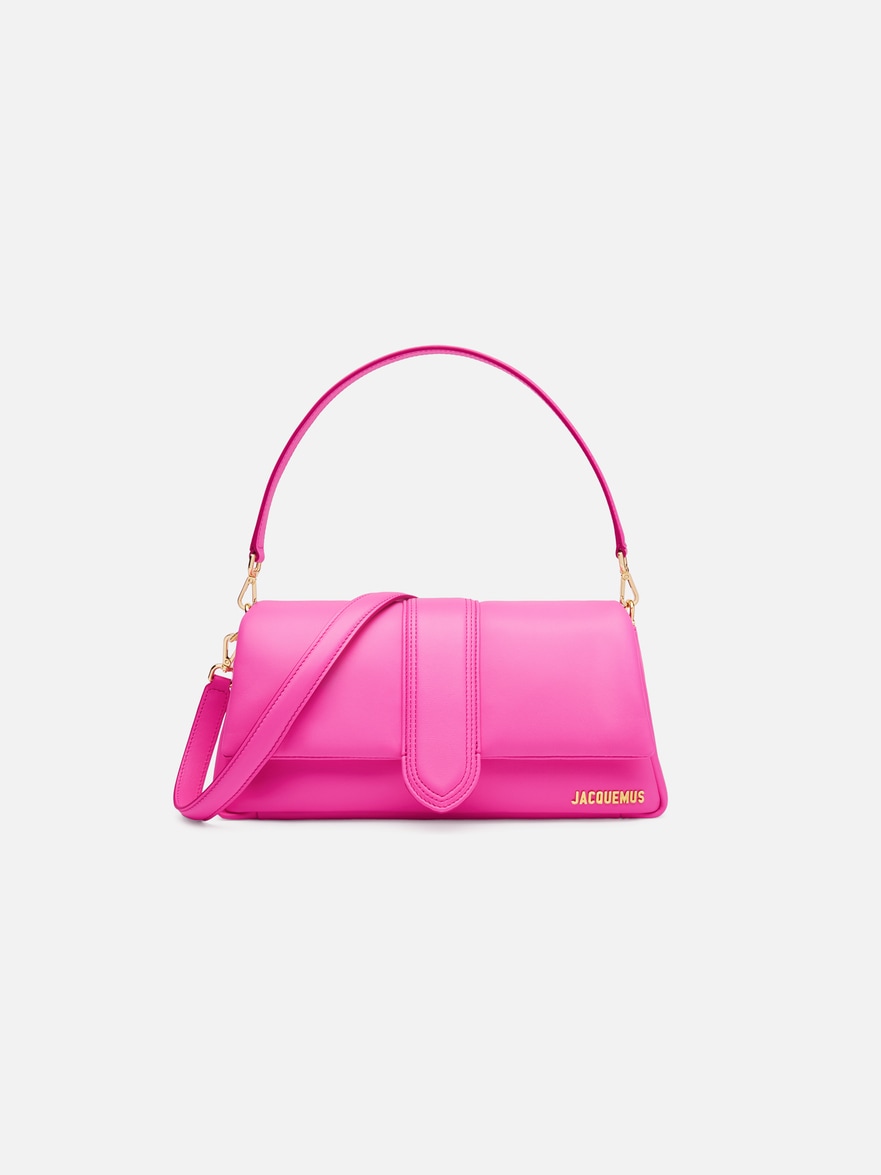
Le Grand Bambino, a top-handle bag in grained leather, structured enough to stand upright but soft enough to compress slightly when you set it down. The handle is a single piece of leather, rounded and thick, and it sits comfortably in the hand without a shoulder strap competing for space under the coat.
Jacquemus sizes this bag to hold what an evening requires: a wallet, a phone, keys, a small notebook if you carry one. Not a laptop. Not a water bottle. The frame is minimal—there is no hard base—but the leather is substantial enough that the bag does not collapse when empty.
In black or one of the seasonal colours. This season includes a deep olive and a burgundy that works with both warm and cool tones. The hardware is gold-toned brass, understated, and the closure is a magnetic flap rather than a zipper.
What Not to Do
Do not add a scarf unless the temperature requires it. Jacquemus builds warmth through layering, not accessories, and a scarf often adds visual weight that the silhouette does not need.
Do not wear the oversized Le Manteau Neve unless you are prepared for it to become the only thing people see. That coat is a piece of architecture. It does not share space with an evening.
Do not carry a crossbody bag. The strap will bisect the coat and break the line from shoulder to hem. If you need hands-free, use a clutch or commit to the top-handle and carry it.
Do not choose sneakers. The proportion collapses. A boot or a loafer—nothing in between.