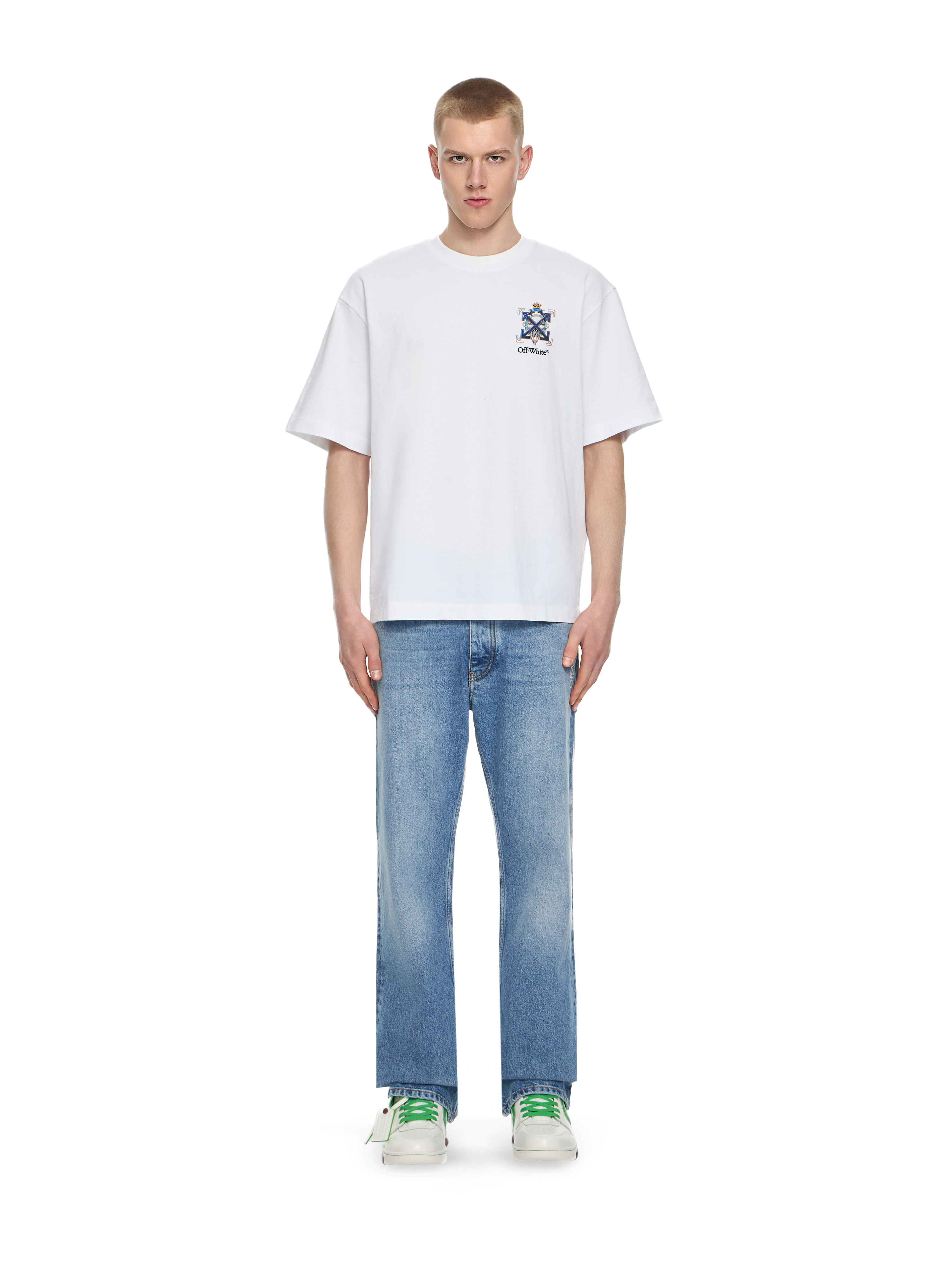
The problem with Off-White at the office isn't the quotation marks or the diagonal stripes
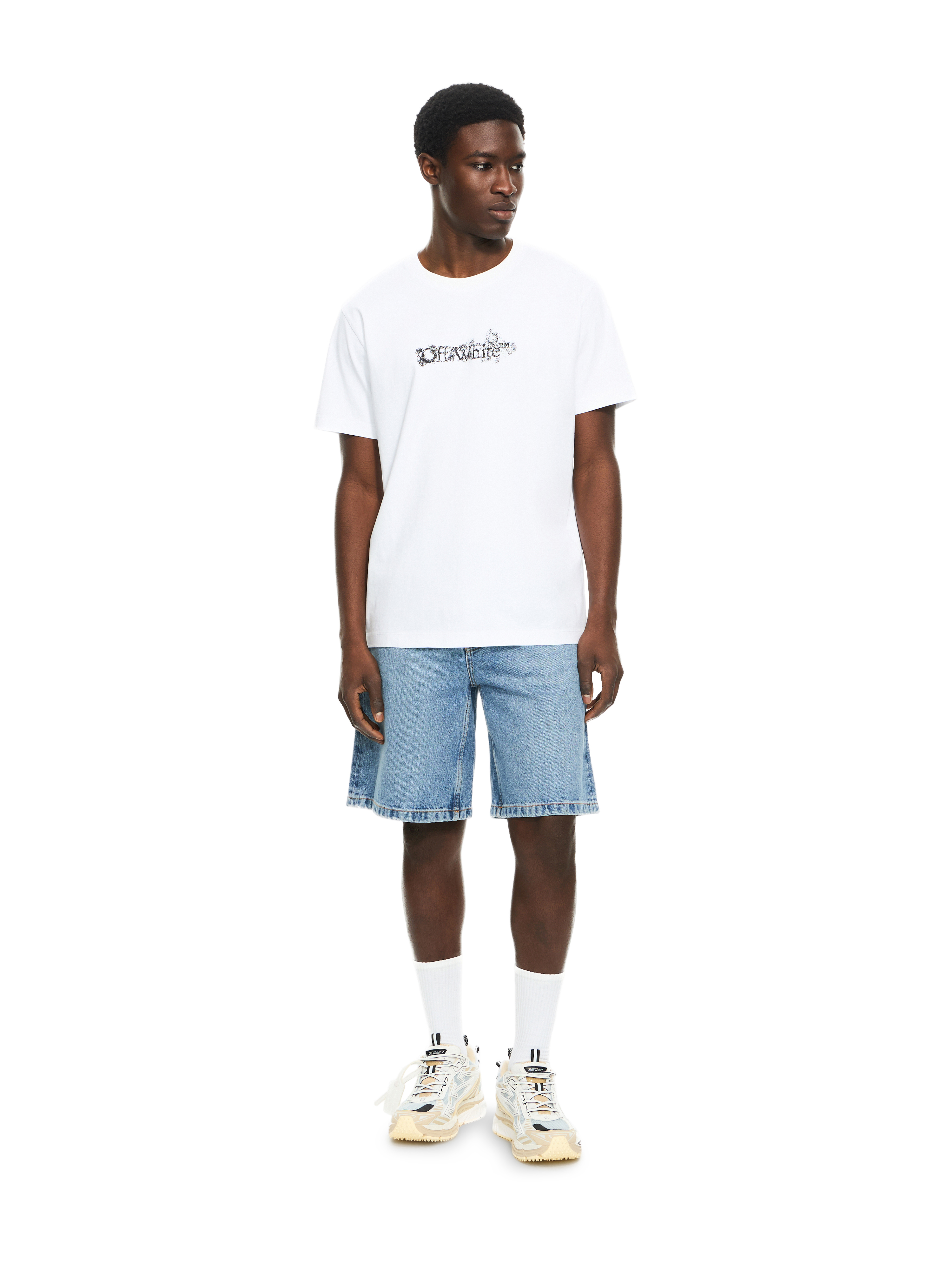
The problem with Off-White at the office isn't the quotation marks or the diagonal stripes. It's that people treat it like costume. They put on the industrial belt, the zip-tie, the logo tee under a blazer, and call it code-switching. What they've done is announce they're performing workwear, not wearing it.
Off-White works in professional settings when you strip away the semaphore. When you take the house's actual construction — the cut of a trouser, the weight of a shirt, the way a jacket sits on the shoulder — and let that do the work. Virgil Abloh built a vocabulary that moved between contexts. The mistake is thinking you need to bring all of it into the conference room.
What follows isn't about toning it down. It's about specificity.
The trouser that doesn't need a belt
Start with Off-White's tailored trousers in wool gabardine, the ones without external branding. They sit higher than you expect, just above the natural waist, with a straight leg that breaks once at the shoe. The fabric has weight — fourteen ounces, substantial enough to hold a crease through a full day. These aren't the cargo pants from the runway. They're the foundation the house returns to every few seasons, cut with darts at the back and a flat front.
Pair them with a leather belt, not the industrial webbing. The trousers have structure; they don't need commentary. In charcoal or navy, they read as suiting. In camel or stone, they're still tailored but softer. The key is the rise. A higher waist changes your silhouette — it pulls the eye up, makes a tucked shirt look intentional rather than fussy. Wear them with loafers or derbies. Save the Dunks for the weekend.
The shirt that isn't trying
Off-White's cotton poplin shirts — the ones without exterior text — have a longer body and a slightly wider shoulder than standard dress shirts. They're cut to be worn untucked or half-tucked, with enough room in the body that they don't pull when you sit. Look for solid colours: white, pale blue, ecru. The maison's shirts often feature subtle details at the collar or cuffs — a contrast stitch, an interior print — that only show when you move.
This is the piece that carries the most risk of looking like you're cosplaying business casual. The fix is in the fabric and the fit. Poplin has a tight weave; it doesn't wrinkle the way Oxford cloth does. And the cut should skim, not cling. If you can see the outline of your undershirt, size up. Tuck it into the high-waisted trousers. Leave the top button undone. Roll the sleeves once, just past the wrist bone, if the day runs long.
The jacket that doesn't announce itself
Off-White's unstructured blazers — wool-blend, single-button, often in a textured weave — work because they're not trying to be suiting. They're cut with a soft shoulder and a shorter body, closer to a shirt-jacket than a traditional sport coat. The lapels are narrow. The pockets are often flapped, sometimes slanted. These jackets layer over a T-shirt as easily as they do over a dress shirt.
The trick is proportion. Because the jacket is shorter, it works best over high-waisted trousers. The break should hit just below the hip bone. In navy or grey, it's nearly invisible in a professional context. In camel or olive, it reads as considered without being loud. Avoid anything with exterior branding or contrast stitching that runs down the sleeves. You want the cut to do the work, not the decoration. Wear it open. If you button it, you've misunderstood the piece.
The bag that isn't a billboard
Off-White's leather totes and structured briefcases — not the transparent PVC, not the ones with text wrapping the sides — are built like actual work bags. They're made from pebbled or smooth leather, with interior compartments that fit a laptop, a notebook, the debris of a day. The hardware is minimal. The handles are reinforced.
This is where people overcorrect. They think a work bag has to be anonymous, so they reach for something beige and forgettable. Off-White's bags work because they have a point of view without needing to announce it. A black leather tote with the house's signature arrow logo embossed — not printed — on the interior is still Off-White. It's just not performing for an audience. The structure matters more than the branding. A bag that holds its shape when you set it down looks more professional than one that collapses.
What not to do
Don't wear the belt. The yellow industrial webbing with 'BELT' printed on it is for editorials and after-hours. It doesn't translate.
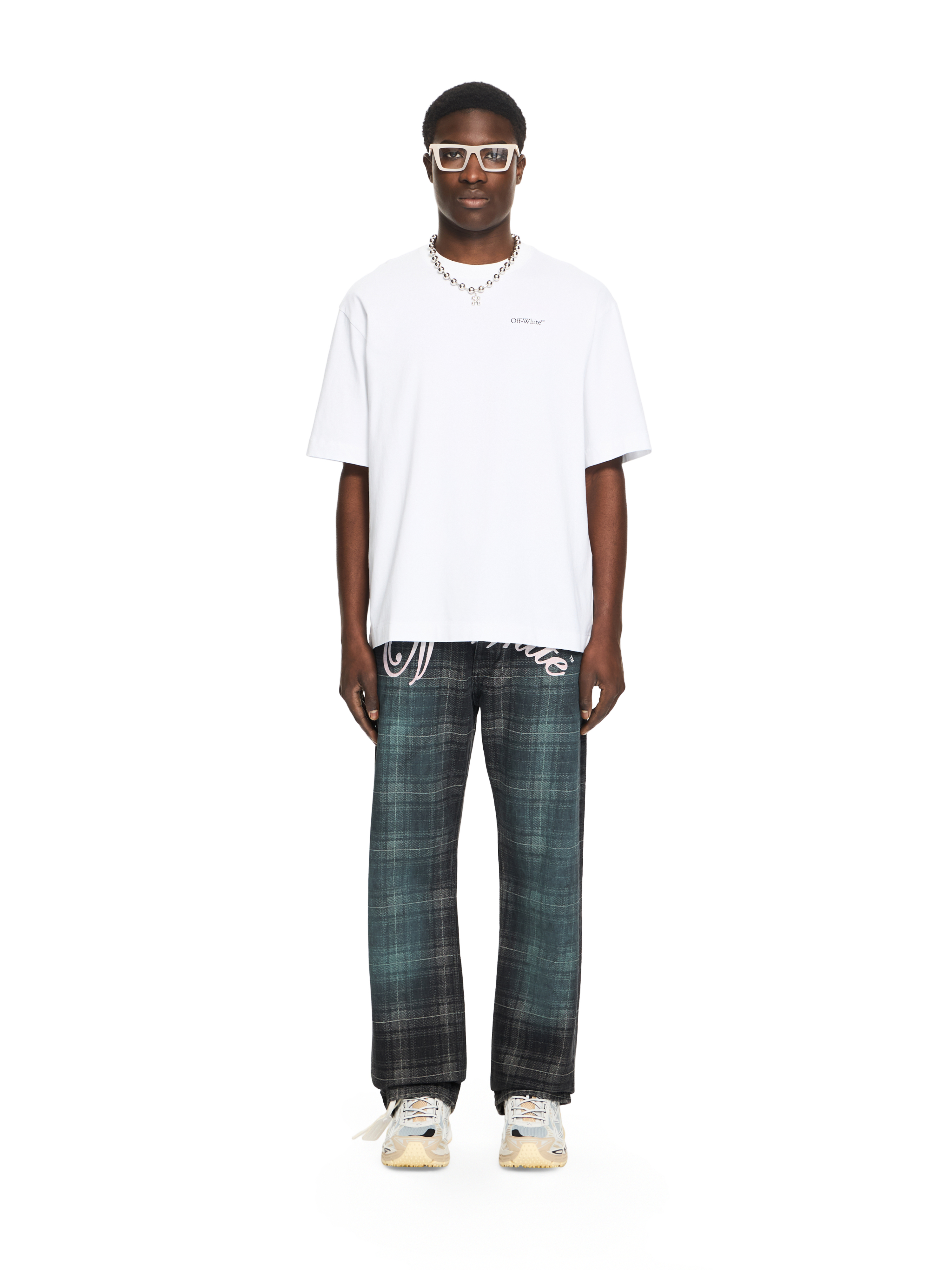
Don't stack logos. One subtle house signature is enough. If the bag has it, the shirt shouldn't.
Don't treat Off-White like streetwear you're sneaking past HR. If you feel like you're getting away with something, you're wearing the wrong piece.
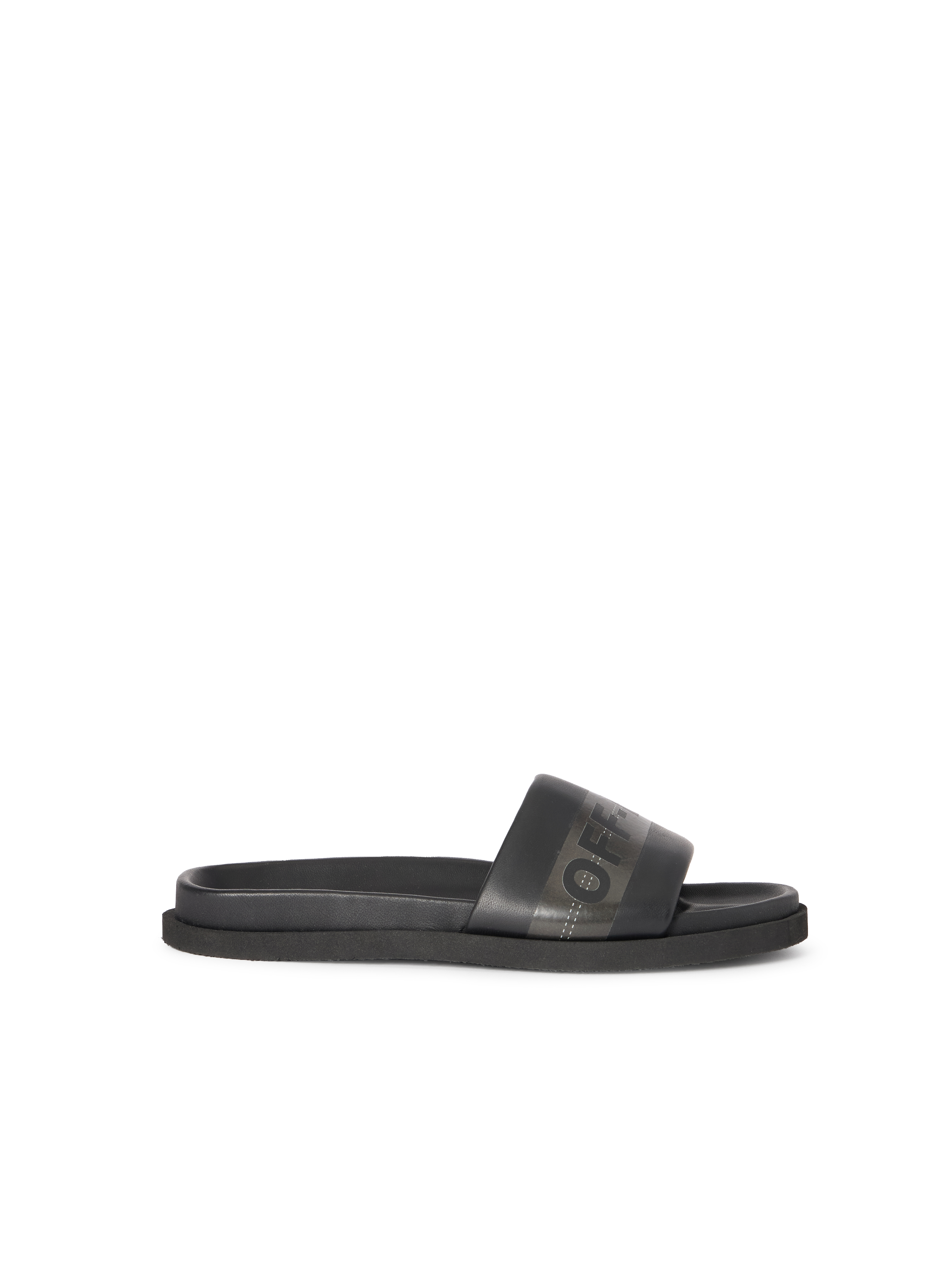
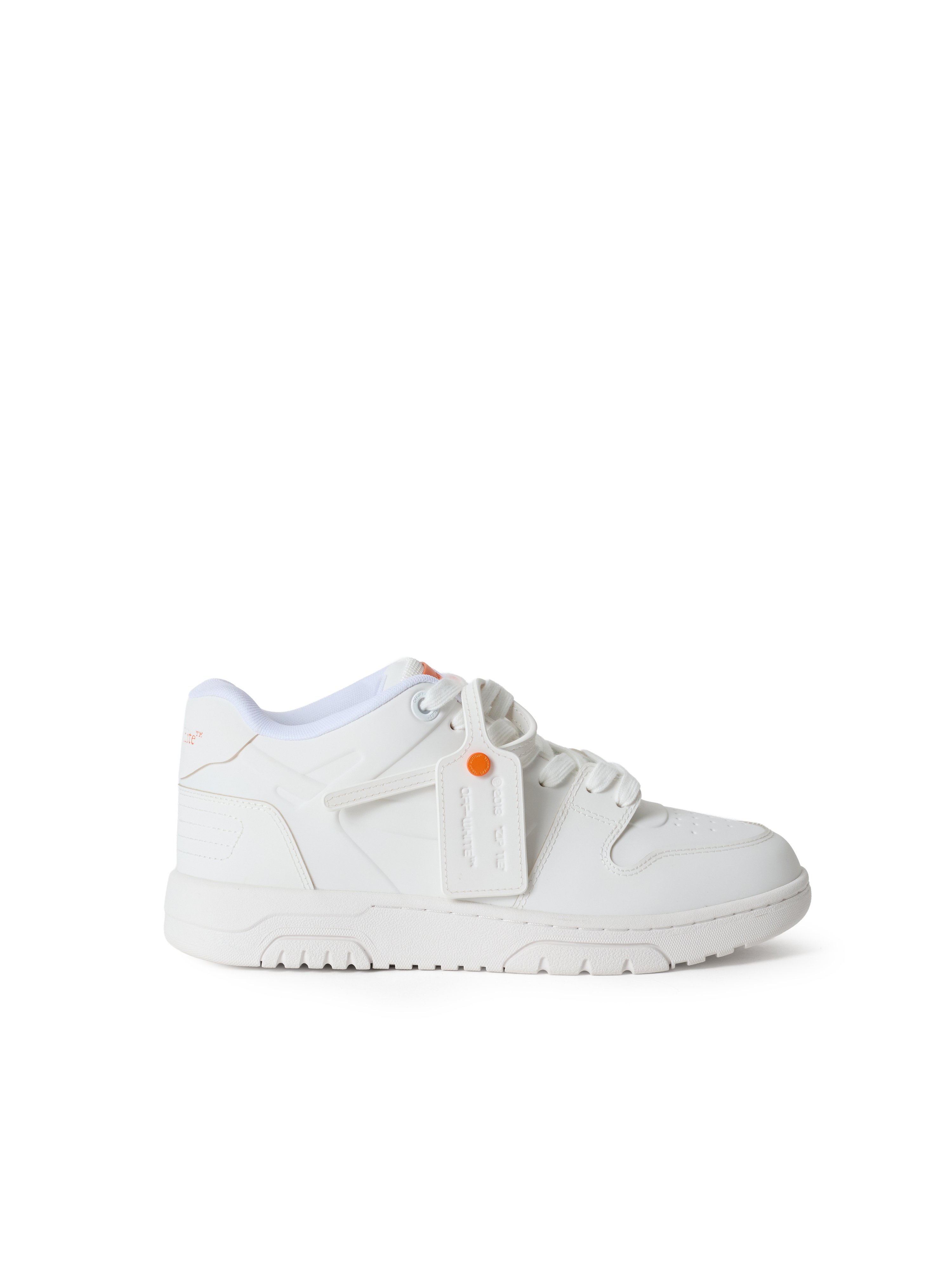
And don't wear the sneakers unless your office actually allows sneakers. Off-White's footwear is some of the house's strongest work, but a Vulcanised sole doesn't make a shoe office-appropriate. If you wouldn't wear Jordans to the meeting, don't wear these either.
The work is in wearing the house's tailoring as tailoring, not as a reference to tailoring. Off-White built a language. You don't need to shout it.