## The Return of Jacquemus Archive
The Return of Jacquemus Archive
Jacquemus is reissuing pieces from its own past. Not as capsules or collaborations, but as restocks: the Chiquito bag from spring 2019, the Le Bob bucket hat from 2018, the asymmetric knit dress from 2020. The archive is back in production, and it is not nostalgia. It is strategy.
The maison announced the program in January. Twenty-four styles, pulled from collections between 2015 and 2021, are now available again. They include the Bambino bag (smaller than the Chiquito, if that is possible), the white poplin shirt with a single oversized sleeve, the straw hat with the wide black ribbon. These are not deep cuts. They are the pieces that circulated most widely on resale platforms, the ones that became shorthand for a certain kind of French ease that was never entirely French and never entirely easy.
This is the first time a contemporary European house has treated its recent past as a renewable resource in this way. Archive reissues used to mean collaboration: a brand would license a silhouette to a streetwear label, or a museum would sanction a reproduction. Jacquemus is doing neither. It is simply making the same bag again, in the same colorways, and selling it at the same price point it held four years ago.
The decision follows a pattern. Prada reissued nylon bags from the nineties in 2019. Dior brought back the Saddle in 2018. But those were single styles, marquee names with two decades of distance. Jacquemus is working with a shorter cycle. The oldest piece in the reissue program is nine years old. The newest is three. That proximity changes the terms. It is not revival. It is continuation.
What Is Being Brought Back
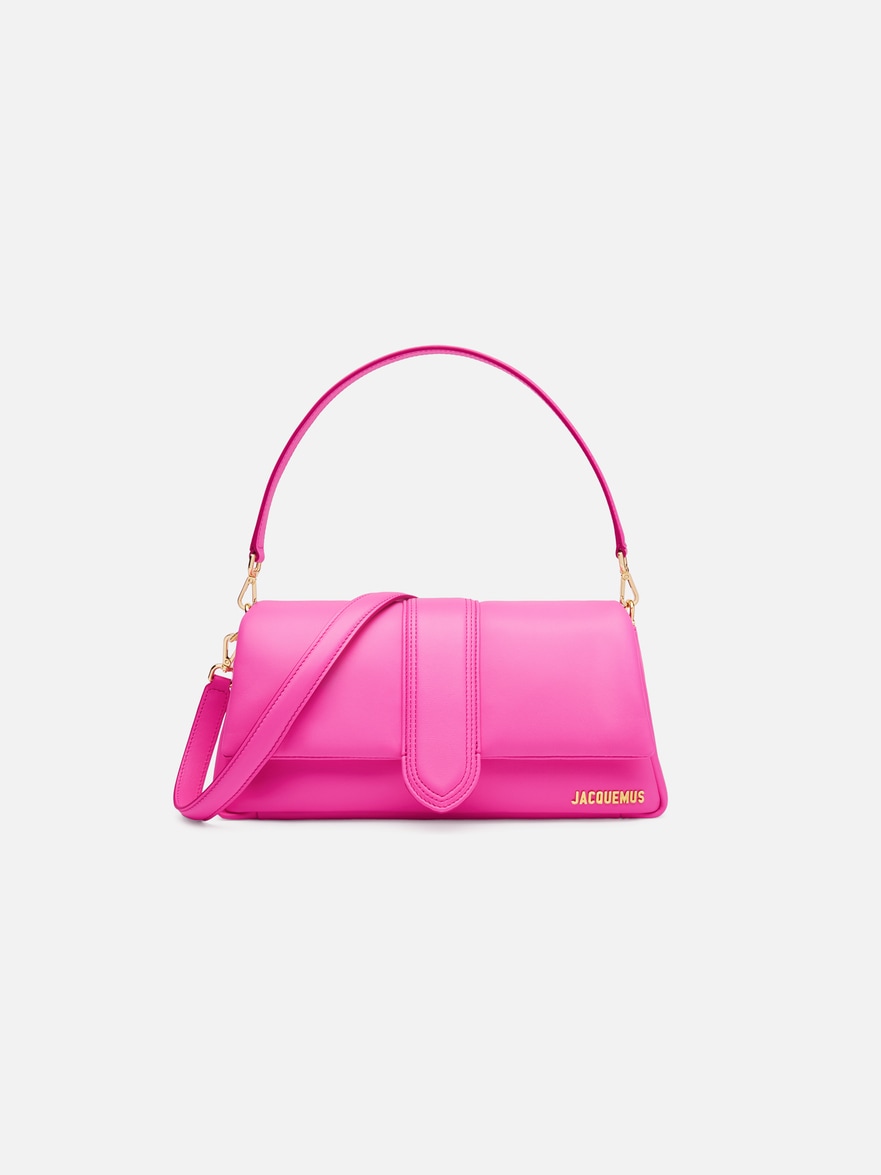
The selection is specific. Accessories dominate: eleven bags, four hats, three pairs of shoes. The Chiquito comes in five colors, including the pale yellow that launched in Provence in 2019. The Bambino is offered in three. Both are structured top-handles with single straps, scaled down to the edge of function. The bags are small enough to hold a phone, a card case, and nothing else. That constraint was the point then, and it remains the point now.
The apparel is narrower. The asymmetric knit dress, shown in spring 2020, returns in off-white and navy. The construction is the same: one shoulder bare, the other covered, a single strap crossing the back. The poplin shirt with the gathered sleeve, from spring 2019, is back in white. The silhouette is sharp where the sleeve is not, which is to say it is sharp everywhere except the right arm, where the fabric pools and twists. The imbalance is deliberate. It was deliberate in 2019, and it is deliberate now.
The hats include Le Bob, the bucket style that became ubiquitous in 2020, and two straw styles with grosgrain ribbon. The shoes are the Rond Carré mules, square-toed and backless, and a pair of slingback heels with a sphere at the vamp. These are not wardrobe foundations. They are accent pieces, the kind that shift the register of an otherwise neutral outfit.
Why Now
The resale market made this possible. Jacquemus styles began appearing on Vestiaire Collective and The RealReal within months of their original release, often at prices above retail. The Chiquito, which sold for $540 in 2019, was listed for $800 by 2021. The Bambino followed the same trajectory. The secondary market was setting the terms, and the maison is now responding by undercutting it.
This is not about scarcity. It is about control. By reissuing the archive, Jacquemus reclaims the narrative around its own objects. The bags are no longer rare finds. They are available, at the original price, from the original source. The move deflates the resale premium and reasserts the maison's authority over its own catalog.
It also reflects a shift in how fashion is consumed. The collection cycle has not slowed, but attention has. A style that might have felt exhausted after one season can return three years later to an audience that missed it the first time, or that is ready to see it again. Jacquemus is betting that the gap between 2019 and 2024 is long enough to make the Chiquito feel new, and short enough that the bag still reads as current.
What It Means
The archive reissue is not a trend yet, but it will be. Other houses are watching. If Jacquemus can extend the commercial life of a style by five years instead of five months, the economics of production change. The pressure to generate newness every season eases. The archive becomes inventory.
For the customer, it means access. The Chiquito is no longer a grail. It is a purchase. That changes the relationship to the object. The bag is still small, still yellow, still Jacquemus. But it is no longer out of reach, which means it is no longer a signal of having been there at the right time. It is a signal of knowing what you want, and finding it still available.
To dress in reissued archive for the next twelve months is to reject the idea that fashion must always be new, and to accept that some shapes are worth repeating.