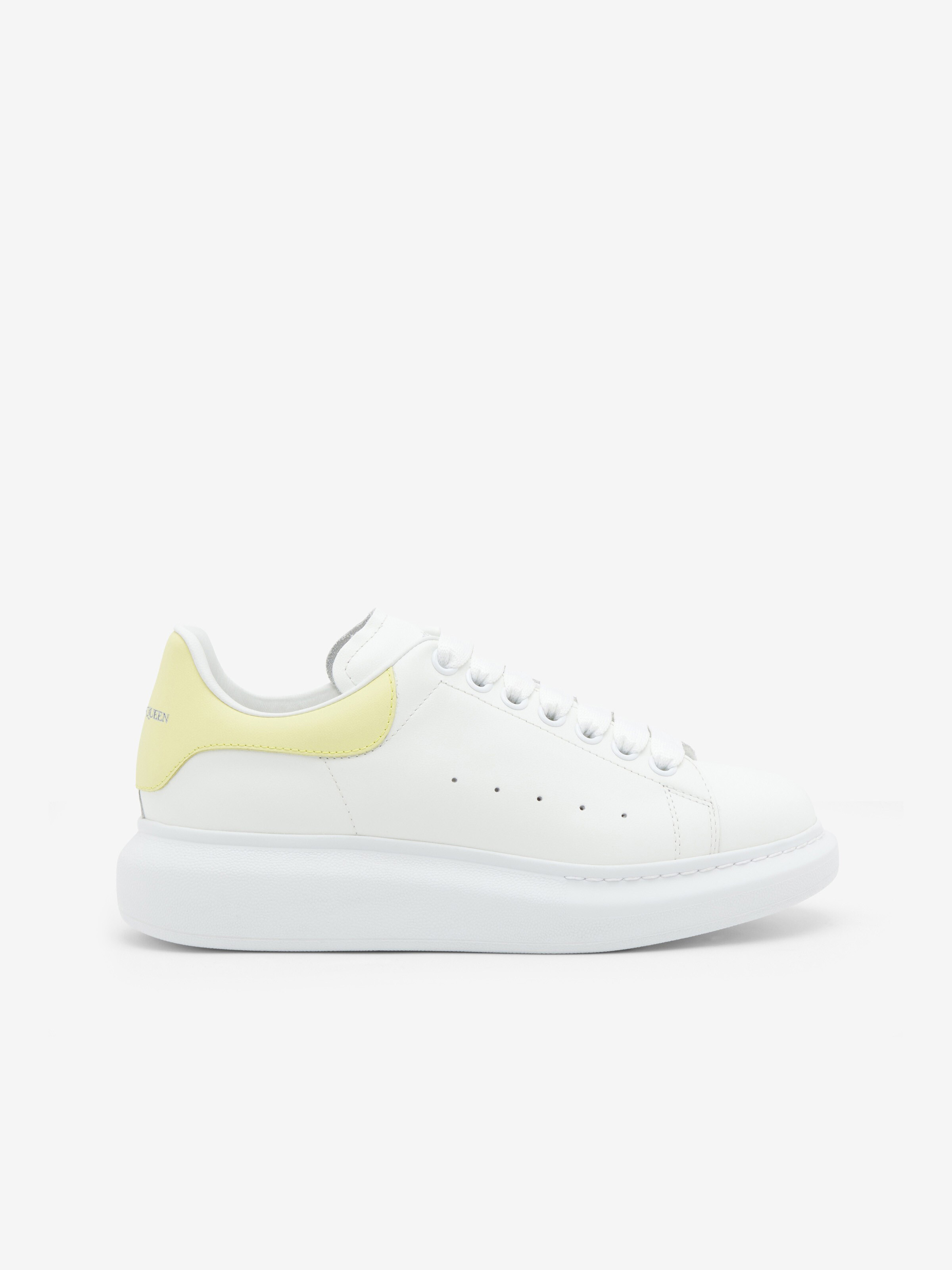
## The Return of the Waist
The Return of the Waist
The spring 2025 collections put the waist back where it belongs: visible, defined, and set at its natural point. Not cinched for drama. Not dropped to the hip for ease. The waist as a hinge between torso and leg, marked by a seam or a belt that sits where the body bends.
Alexander McQueen showed this first and most clearly. Seán McGirr's second collection for the house opened with high-waisted trousers in charcoal wool, cut with a flat front and a single pleat that released into a straight leg. The waistband sat two inches above the hip bone. The jackets were short—cropped at the rib, not the navel—so the proportion held. The silhouette read as taut and upright, a correction after seasons of low-slung denim and elastic waists that erased the body's architecture.
McQueen was not alone. Chloé, under Chemena Kamali, built its collection on the same premise. Wide-leg trousers in ivory linen and caramel cotton sat high and flat across the stomach, fastened with covered buttons. The shirts were tucked. The belts were narrow leather, knotted rather than buckled, but always present. At Loewe, Jonathan Anderson showed trousers with waistbands that curved upward at the side seam, following the iliac crest. The effect was almost Edwardian: a long leg, a compact torso, and a clear line between the two.
The difference is in how each house justifies the waist. Chloé frames it as part of a broader return to the 1970s, when trousers were tailored and women dressed with the same formality as men. The references are visible: Helmut Newton's photographs, Bianca Jagger in a white suit, the idea of the trouser as an evening garment. Loewe approaches it structurally, as a problem of volume and balance. Anderson's trousers are wide enough to suggest a skirt, but the high waist keeps them legible as trousers. The waistband is the anchor.
Alexander McQueen, by contrast, treats the waist as a site of control. McGirr's trousers do not flow. They hold their shape through the hip and thigh, then release into a straight or slightly flared leg. The waistband is firm—often reinforced with petersham or a hidden stay—so it does not roll or gap. This is tailoring that asks the wearer to stand differently: shoulders back, spine long, weight centred. It is not comfortable in the way a pull-on pant is comfortable. It is the older definition of ease, which is about fit rather than stretch.
The spring 2025 McQueen collection also included skirts and dresses with defined waists, but the trousers carried the argument. A black wool pair, shown mid-collection, had a waistband that extended into a short peplum at the back—a flare of fabric that emphasized the narrowness of the waist by contrast. Another pair, in navy cotton twill, was cut with a yoke that dipped into a shallow V at the centre front, directing the eye downward to where the zip sat flat and invisible. These are technical choices. They are also aesthetic ones. The waist is not incidental. It is the point.
This marks a shift from the last three years, when the dominant trouser was either a low-rise cargo pant or a high-waisted wide-leg in denim, worn loose and often cuffed. Both styles obscured the waist or treated it as optional. The new trousers require a belt, or at least a waistband that fits closely enough not to need one. They require tucking in a shirt, or wearing a top short enough that the waistband is always visible. They require, in other words, intention.
What McQueen, Chloé, and Loewe share is a rejection of ease as the guiding principle. The spring collections are not about clothes that adapt to the body. They are about clothes that give the body a shape to inhabit. The waist is the mechanism. It is where the garment and the wearer negotiate.
To dress in this for the next twelve months is to accept that structure is back, and with it the small daily disciplines—ironing, tucking, fastening—that structured clothes demand.