## The Shoulder Returns — And Jacquemus Owns It Differently
The Shoulder Returns — And Jacquemus Owns It Differently
The shoulder is back, but not the eighties power iteration. This one sits closer to the body, extends the line without drama, and relies on construction rather than padding. It showed up in Paris across three distinct registers: Jacquemus made it louche, The Row made it monastic, and Totême made it wearable in a way that lands first at Matches, then everywhere else.
Simon Porte Jacquemus opened his autumn show with a fitted blazer in charcoal wool, shoulder seam sitting exactly where the deltoid ends. No gather, no slope. The effect was immediate: taller, more composed, but still loose enough in the body to avoid the stiffness that plagued tailoring two seasons ago. He repeated the gesture across coats, knit jackets, even a leather trench that closed with a single hook at the sternum. The shoulder did the work. Everything else stayed quiet.
The Row's approach, predictably, leaned into severity. Their shoulder was wider, blunter, almost brutalist in how it refused to acknowledge the arm beneath it. Felted wool, no lining, seams you could see from across the room. It's the kind of tailoring that photographs beautifully and wears like architecture — which is to say, not everyone will commit. But it sets a line. And when The Row sets a line, the wholesale market watches.
Totême split the difference. Their blazer — a double-breasted style in navy wool-cashmere — kept the extended shoulder but softened the pitch. Slightly dropped armhole, a hint of ease through the chest, and a price point that doesn't require a phone call to your accountant. It's the version that moves. The one buyers write into their pre-orders without hesitation, because it solves the problem of looking considered without requiring a complete wardrobe overthrow.
What separates Jacquemus isn't the shoulder itself — it's everything around it. Where The Row pairs structure with austerity and Totême pairs it with Scandi restraint, Jacquemus pairs it with skin. His models wore the tailored blazer open over bare torsos, or with a single silk camisole that stopped at the rib. The trousers sat higher than they have in three years, which made the jackets feel shorter even when they weren't. Proportions shifted. The body returned, but framed differently.
This isn't about sex, exactly. It's about presence. The Jacquemus shoulder doesn't announce itself the way a Mugler shoulder did. It doesn't need to. It assumes you're already in the room, already part of the conversation, and it gives you the architecture to stay there without performing.
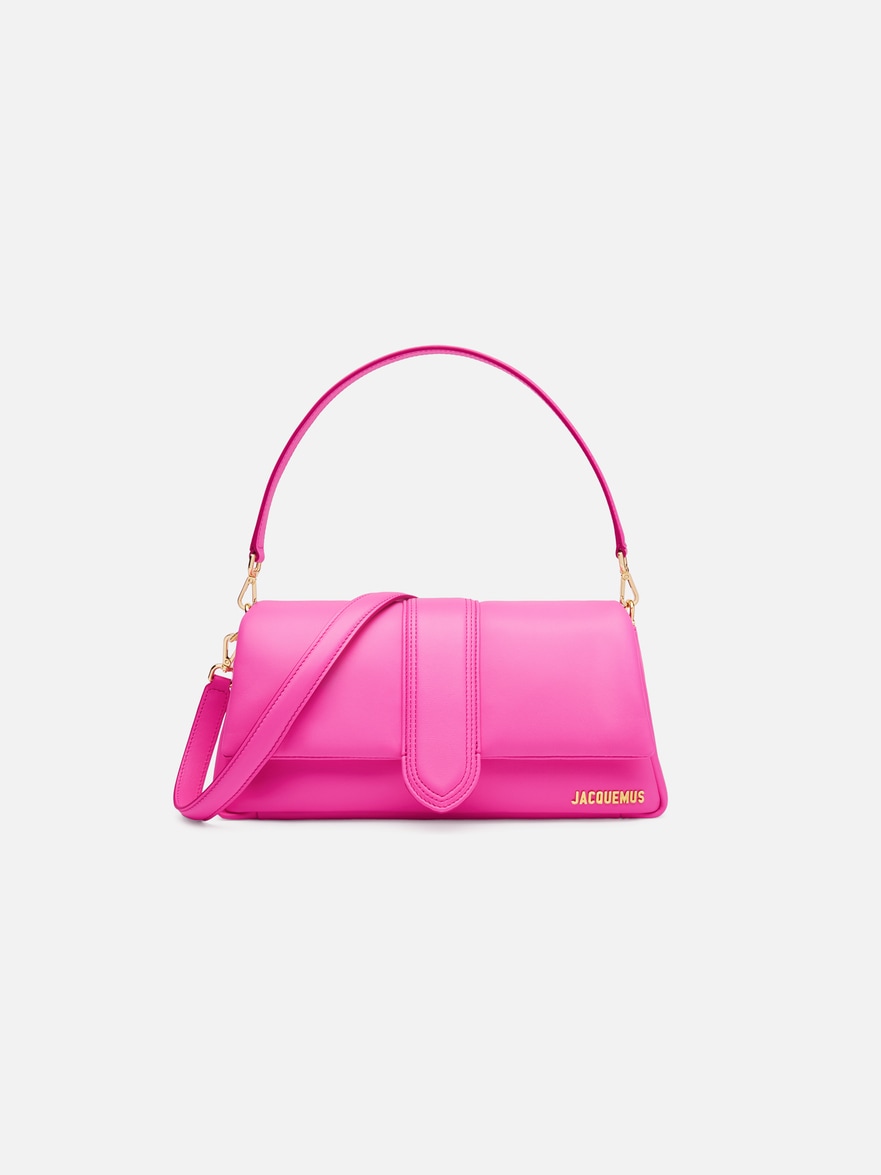
The bags followed the same logic. The new 'Bambino' — a structured top-handle in vacchetta leather — echoed the shoulder's geometry. Sharp at the edges, soft through the body, small enough to force editing. You're not carrying a laptop in this. You're carrying a phone, a card case, and the assumption that someone else is handling logistics. Jacquemus has always understood that accessories clarify intent. This season, the intent was sharpness without the weight.
Compare that to The Row's 'Margaux', which remains the house's anchor piece for good reason. Tote structure, clean lines, big enough to be useful. It's the bag you carry when you want to signal that you've figured it out. But it doesn't shift the conversation. It confirms it. The Bambino, by contrast, asks a question: what if we stopped pretending we needed all that space?
Totême's leather goods stayed predictable — which isn't a criticism. Their 'T-Lock' shoulder bag continues to perform exactly as designed: mid-sized, structured, versatile enough to work across three years of wardrobe shifts. It's the bag equivalent of their tailoring. Solid, considered, not trying to lead.
The shoulder's return matters because it resets proportion across the entire silhouette. When the shoulder sits wider and higher, trousers can't stay low and pooled. Bags can't stay oversized and slouchy. Shoes sharpen — Jacquemus showed pointed flats and slim boots, both with enough structure to hold the line his tailoring started. Everything tightens into coherence.
This isn't a trend that requires buying in completely. You don't need the full Jacquemus look — blazer, bare torso, high trouser, tiny bag — to participate. But you do need to acknowledge that the proportions have moved. The slouch that defined the last three seasons is finished. What's replacing it is more demanding. It requires fit, not just size. It requires intention, not just assembly.
The question for the next twelve months isn't whether to adopt the shoulder — it's already here, and the wholesale orders confirm it. The question is which version you're willing to wear: the severity of The Row, the accessibility of Totême, or the provocation of Jacquemus. All three work. All three will sell. But only one of them makes you reconsider how much body you're willing to show while looking that structured.