The waist has moved
The waist has moved. Not vanished, not dissolved into dropped seams or elastic casings, but returned to its anatomical position—defined, structured, and carrying the rest of the silhouette from a single horizontal line. Fendi's autumn 2024 collection made this legible in the first three exits: high-waisted trousers in grey wool flannel, each with a tab closure and a single pleat, worn with cropped knits that stopped exactly where the waistband began. No overlap, no slouch. The separation was the point.
This is a departure. For the last three seasons, the dominant trouser sat low or indeterminate, often held by a drawstring, the waist obscured by an untucked shirt or a long sweater. Fendi has moved in the opposite direction. The tailored trouser is back, but it is not the same trouser from five years ago. The rise is longer. The leg is straight, not wide, not tapered. The waistband is visible, often emphasised with contrast stitching or a leather tab. The silhouette asks the wearer to acknowledge where the torso ends.
At Bottega Veneta, Matthieu Blazy approached the same shift from a different material logic. His autumn 2024 trousers were cut in washed denim and heavyweight cotton twill, the waistband reinforced and slightly stiffened, sitting just above the hip bone. But where Fendi kept the line clean and the closure minimal, Bottega introduced texture—topstitching in a contrasting thread weight, belt loops wide enough to read as a design element, buttons covered in leather. The effect was workwear, but workwear that had been re-drawn with a draughtsman's attention to where one panel meets another. Both houses shared the same instinct: the waist is a location, not a suggestion.
The Row, by contrast, offered a third position. Their pre-fall 2024 collection included high-waisted trousers in black wool gabardine and charcoal cashmere, but the waistband was finished flat, almost flush with the body, and fastened with a hidden hook closure. No belt loops, no visible hardware. The trousers sat high, but quietly. The silhouette was controlled without announcing the mechanism of that control. This is the difference between structure and its display. Fendi and Bottega Veneta both show the waistband as an event. The Row treats it as a given.
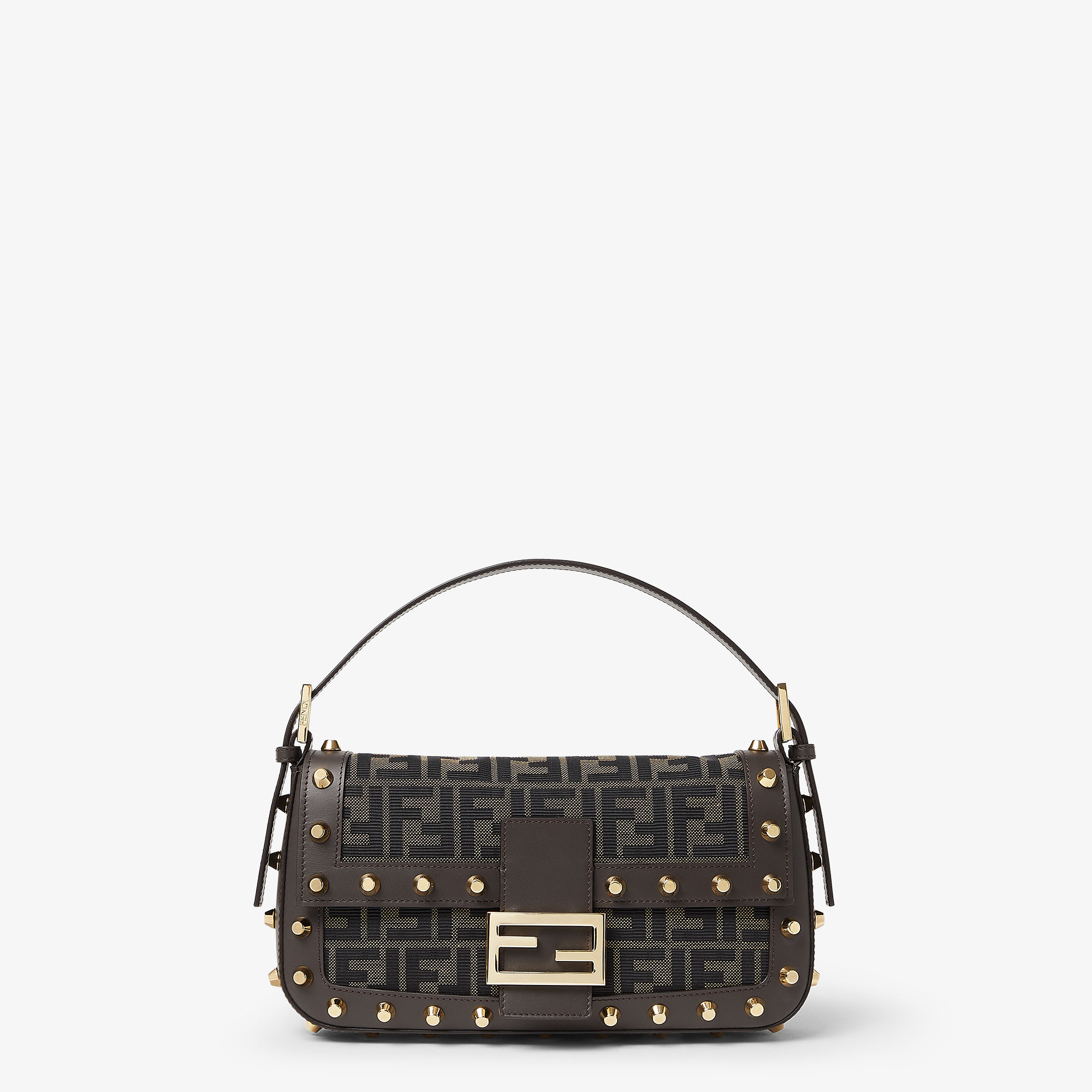
Fendi's version carries a second agenda. The house has been working through a specific vocabulary under Kim Jones: the baguette as a sculptural object, the use of fur as a construction material rather than an embellishment, and now the reintroduction of tailoring that references the archive without replicating it. The autumn 2024 trousers echo shapes from the late 1990s—Silvia Venturini Fendi's early work on the accessories line—but the fabrication is different. The wool is lighter, the lining is absent or minimal, and the trouser is designed to be worn without a belt. The waistband does the work.
This is not about formality. None of these trousers require a blazer. Fendi styled them with shrunken cardigans and ribbed tanks. Bottega Veneta paired them with cotton shirts worn open over a bare torso. The Row showed them with fine-gauge knits and flat leather sandals. The waistband is structured, but the context remains casual, or at least adjacent to casual. What has returned is not suiting, but the idea that a trouser can hold a line without borrowing authority from the garments around it.
The shift is visible in retail. Pre-orders for high-waisted styles have increased across the northern hemisphere markets, particularly in tailored wool and heavyweight cotton. The Fendi trouser—style FZP532, a grey wool flannel with a single pleat and a tab closure—sold through its first allocation in four days. Bottega's washed denim version, slightly lower in price point, followed a week later. The Row's gabardine style remains available, but that is consistent with their distribution model: smaller runs, longer selling windows.
The question is not whether the high waist will persist—it already has—but what it displaces. The low-slung trouser, held by a drawstring or an elastic inset, offered a different relationship to the body: forgiving, adjustable, resistant to structure. The return of the waistband asks for commitment. The garment must fit at a single point, and that point is visible. There is no hiding a poor fit when the waistband sits above the hip.
To dress in this for the next twelve months is to accept that the body has edges again, and that the trouser will mark them.